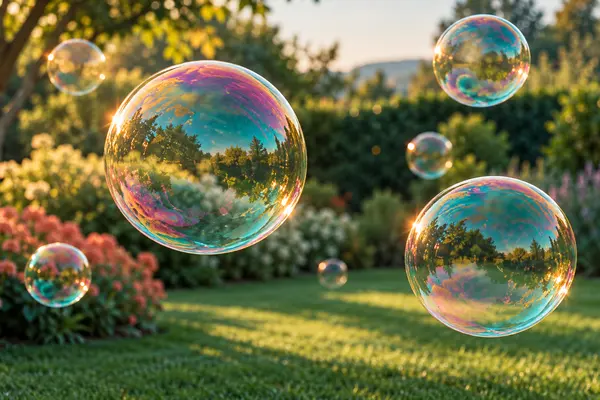
COLOUR
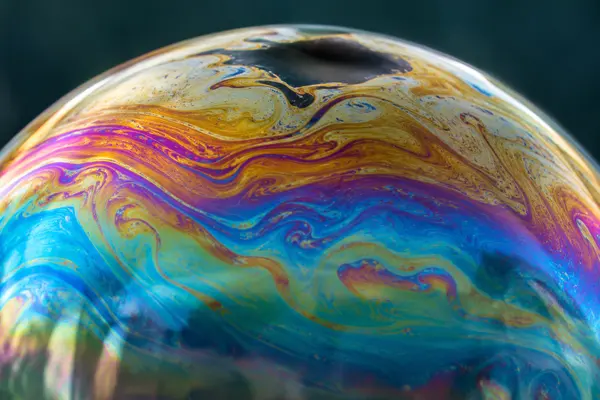
Colour is thickness
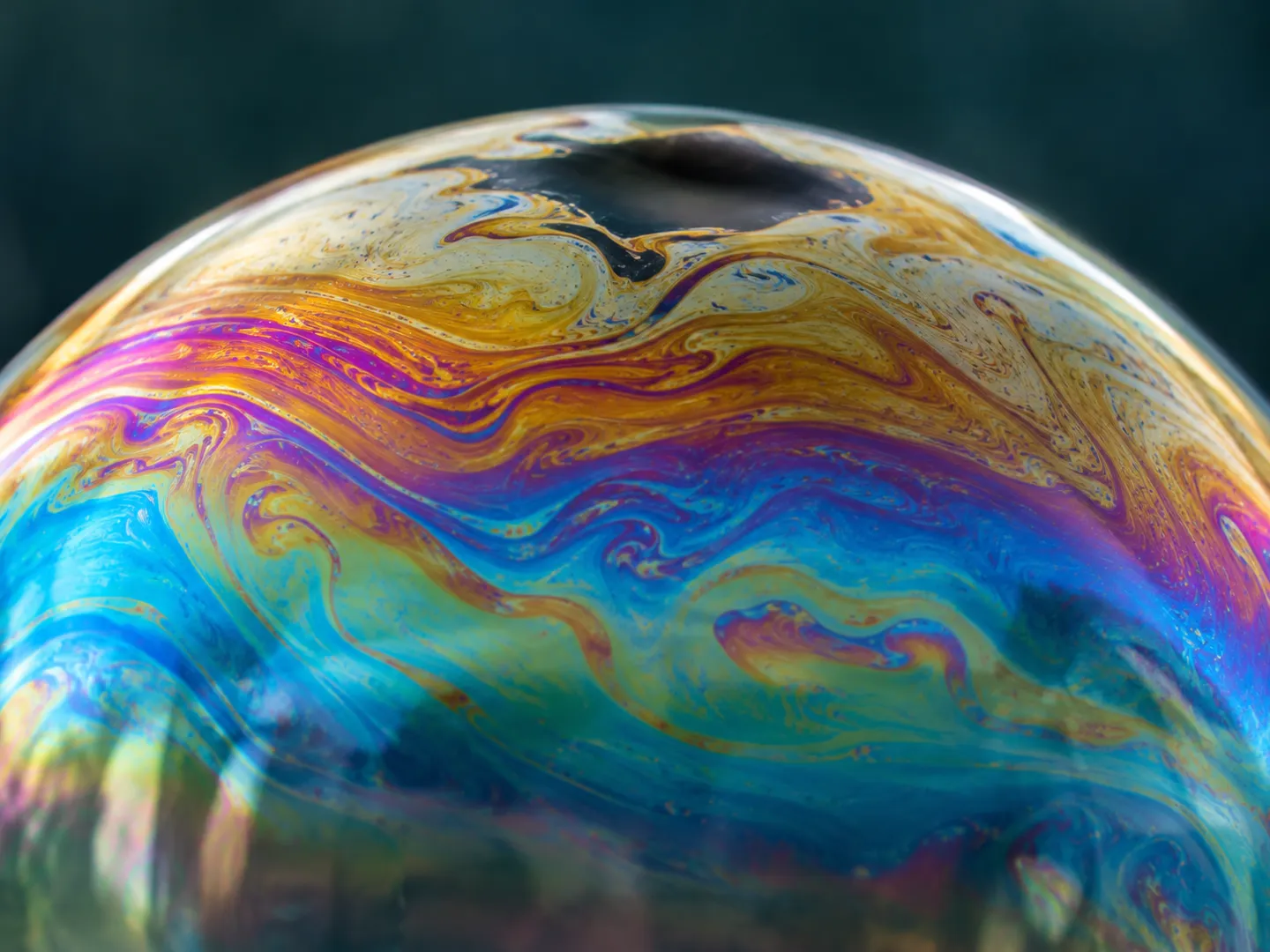
Light bouncing off the film's two surfaces interferes, so each colour marks a different thickness, measured in nanometres.
Read the colours doodlebubbles
THE SCIENCE OF SOAP BUBBLES
A soap bubble is a film thinner than a hair, and it tells you what it is doing.
The swirling colours map how thick the film is. The round shape comes from surface tension. And the pop usually comes from water evaporating away. Here is what physicists have found, in plain English.
Plain English, with the sources linked.
THIN FILM big physics
Read a bubble's coloursTHE SHORT ANSWER
A bubble is a skin of soapy water around air,
and almost everything about it follows from that.
COLOUR
Light bouncing off the film's two surfaces interferes, so each colour marks a different thickness, measured in nanometres.
Read the coloursLIFETIME
Films thin as water drains and evaporates. An ordinary bubble lasts about a minute; a lab-made one lasted 465 days.
See the recordTECHNIQUE
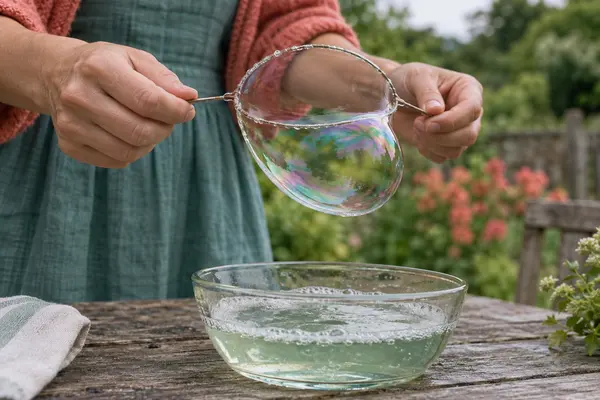
A steady strong wind can push a film through a wand, or a gentle puff can start a bulge that keeps on growing.
Blow better bubbles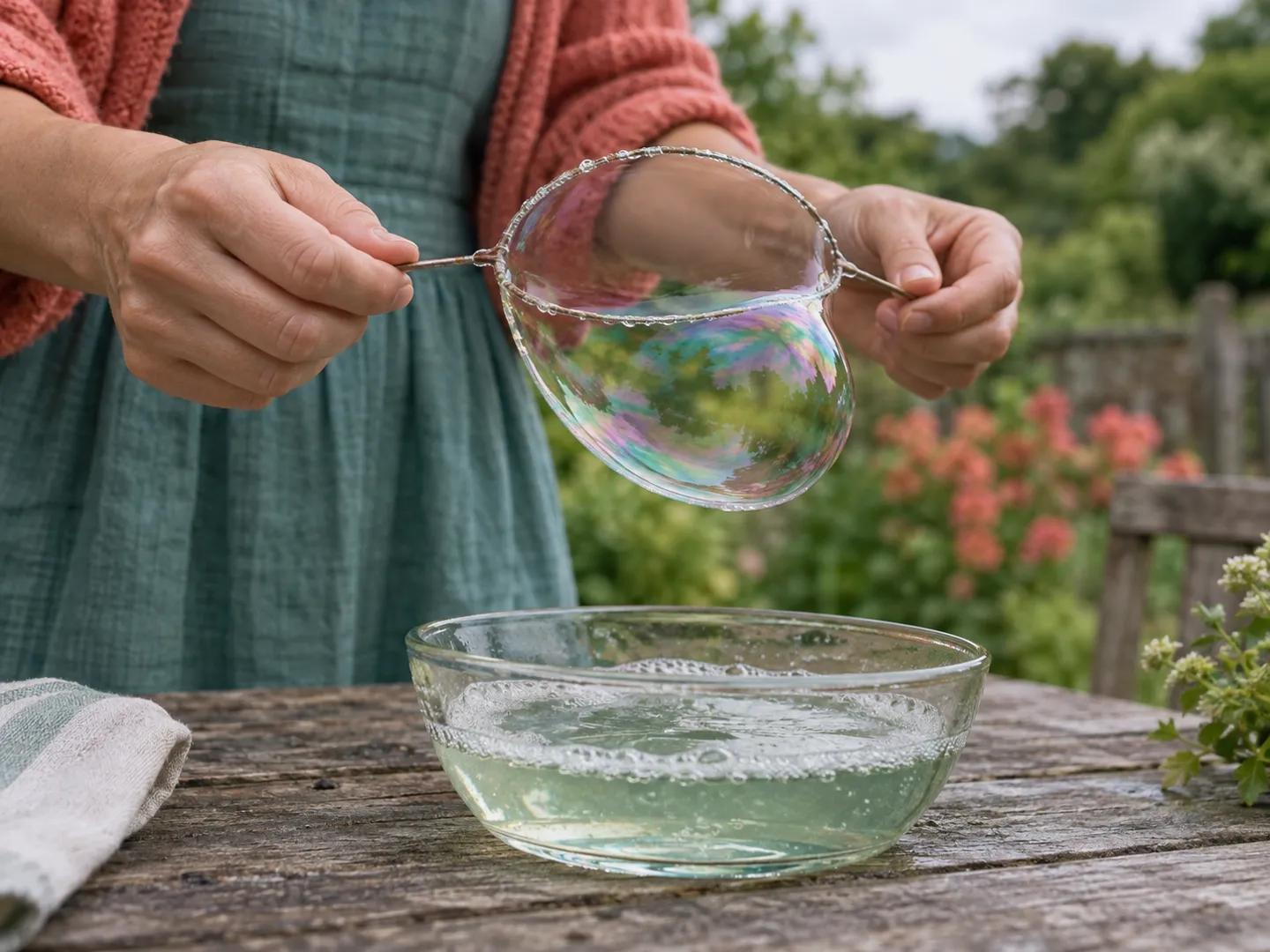
BLOW BETTER BUBBLES
A short, gentle breath can bend the film into a bulge that carries on growing as the airflow slows. You do not need to keep blowing hard.
Evaporation is the main thing thinning a film, so hot sun and a dry breeze work against you. Shade and still air are kinder to bubbles.
The longest-lived lab bubbles used glycerol, which takes up water from the air and offsets evaporation. That is why it often appears in bubble mixtures.
The Emory team's giant-bubble mixture added a polymer, guar powder, to washing-up liquid and water, making the film stretchy enough to grow huge.
TWO RECORD-BREAKING FILMS
Labs have pushed soap films far past
what a wand and a pot of mixture can do.
1 min vs 465 days
How long before it burst
A University of Lille team found traditional soap bubbles lasted around a minute. Bubbles with a shell of plastic particles, glycerol and water lasted far longer: one survived 465 days. Glycerol takes up water from the air, and the particles stop the shell draining.
EVERLASTING BUBBLES · 2022
100 m²
Area of film without breaking
Emory University physicists found that long-chain polymers make a soap film viscous but stretchy. With them, a film only a few microns thick can stretch to about 100 square metres, and mixing polymers of different sizes made films stronger.
GIANT FILMS · 2020
Both results attack the same two enemies: water draining out of the film and water evaporating from it.
A QUICK COLOUR CHECK
Pick a colour you can see on a bubble. The thickness comes from the thin-film interference figures published by the School of Physics at UNSW Sydney.
The figures are approximate first-order values. Thicker films repeat the colour sequence, so a colour narrows the thickness down rather than fixing it exactly.
BUBBLE FACTS
A yellow band marks a film about 150 nanometres thick, magenta about 200 and cyan about 250. Each colour appears where another wavelength is cancelled out.
Where a film is much thinner than a wavelength of light it reflects almost nothing and looks black. Liquid flows down under its own weight, so a film is usually thinnest at the top.
In the nineteenth century the Belgian scientist Joseph Plateau worked out that three soap films are stable when they meet at angles of 120°. Look where bubbles in a foam touch.
A 2024 study of vertical soap films up to 1.2 metres tall found that evaporation, not drainage, mainly decided how long they lasted, and looked at the role of humidity.
A 2018 study led from NYU found a bubble forms either when a steady, strong wind pushes the film through the wand, or when a gentle puff bends it out and it keeps growing as the air slows.
QUICK QUESTIONS
Short answers to the questions people ask most.
Light reflects from both the outer and inner surface of the thin soap film. The two reflections interfere, cancelling some colours and strengthening others. Which colour you see depends on how thick the film is at that spot, so the colours act as a thickness map.
A dark or black patch is where the film has become much thinner than a wavelength of light, so it reflects almost nothing. Films thin as liquid drains downwards and evaporates, and a 2024 study of large films found evaporation mattered far more than drainage for how long they lasted.
An ordinary soap bubble lasts around a minute. In 2022 a team at the University of Lille reported bubbles with a shell of plastic particles, glycerol and water, one of which survived 465 days.
Surface tension pulls a soap film into the shape with the smallest area it can manage. For a free-floating bubble holding a fixed amount of air, that shape is a sphere, which has the smallest surface area for its volume.
Long-chain polymers. Physicists at Emory University found that polymers make a soap film both viscous and stretchy, and that mixing polymer molecules of different sizes made films stronger. Such films can stretch to about 100 square metres without breaking.
Updated
A NAME THAT FLOATS
doodlebubbles.com is part of the DoodleSale portfolio. It isn't in an auction right now, but you can ask about leasing it.